Types of Sofa Mechanisms: Which One for Which Project?
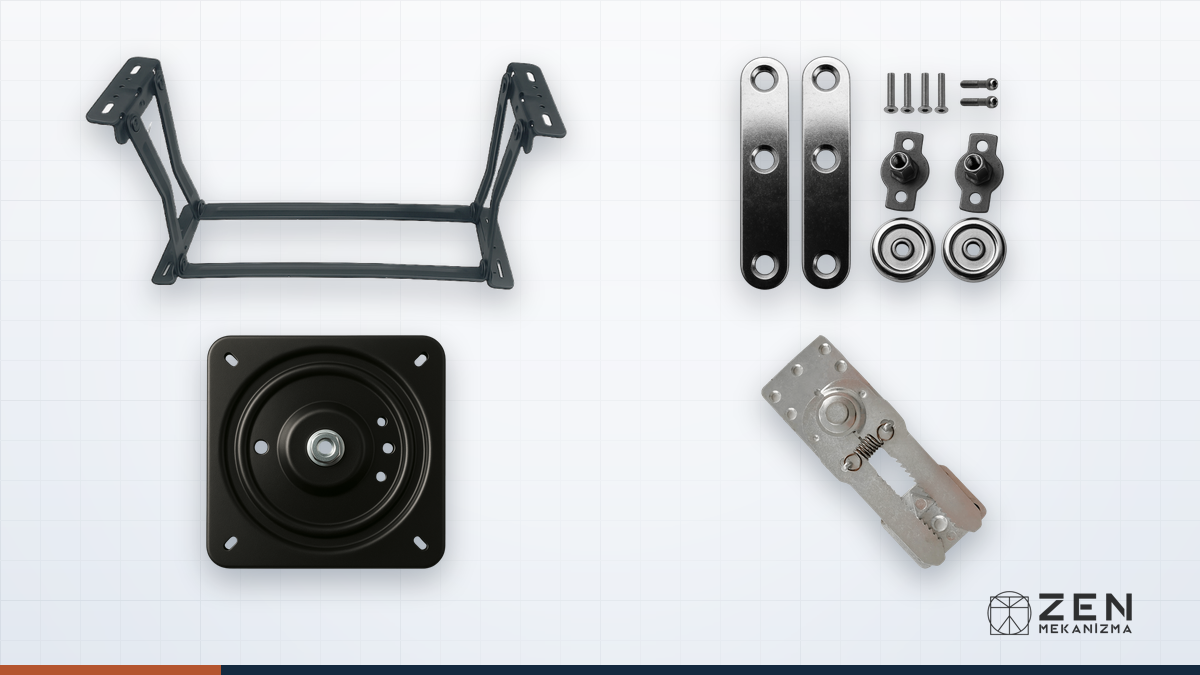
The parts we call "mechanisms" in furniture do one of three jobs: they change a position, carry a movement, or transfer load into the frame. A seating project usually contains all three. This guide sets out which part does which job, and which of them your project needs.
What is a sofa mechanism?
A sofa mechanism is the metal part — or set of parts — that delivers the moving function of a piece of furniture. Once upholstery is finished it is usually invisible, yet it largely determines how the product feels: how smoothly it opens, how quiet it is, how solid it seems. A mechanism has to last as long as the frame, because it is the hardest part to replace.
1. Backrest adjustment mechanism: two positions, two seat depths
A backrest adjustment mechanism moves the back of the seat forward and backward to change the seat depth. Pulled forward by hand, the back goes to the sitting position; pushed back, it goes to the relaxing position that deepens the seat, and the mechanism rests in one of these two end positions. There is no separate lever or button.
- Where it is used: sofas, armchairs, TV and lounge chairs.
- Its strength: because it stays under the upholstery, it does not change the outward look of the furniture.
- Note: the number of sets is not fixed; it is set per project according to the width of the back.
2. The CSS family: the fitting kit behind the opening movement
CSS is the name of the fitting kit that carries the opening and closing movement of a seat. The box contains a link plate, a mounting screw, a pivot bolt and a nut-welded plate, all fixed to the wooden frame. The family has three members and they share the same assembly logic:
- CSS 3 / CSS ECO — economy segment. For budget-driven work at high volume.
- CSS 4 — general purpose. Cost balanced against durability; office, home and waiting-area furniture.
- CSS Lux — upper segment. The kit is the same as CSS 3; the difference sits in material grade and surface finish.
Shared assembly logic has a practical meaning: changing segment does not require changing your production line. For manufacturers positioning the same product at two price points, this is the single most useful fact in the comparison.
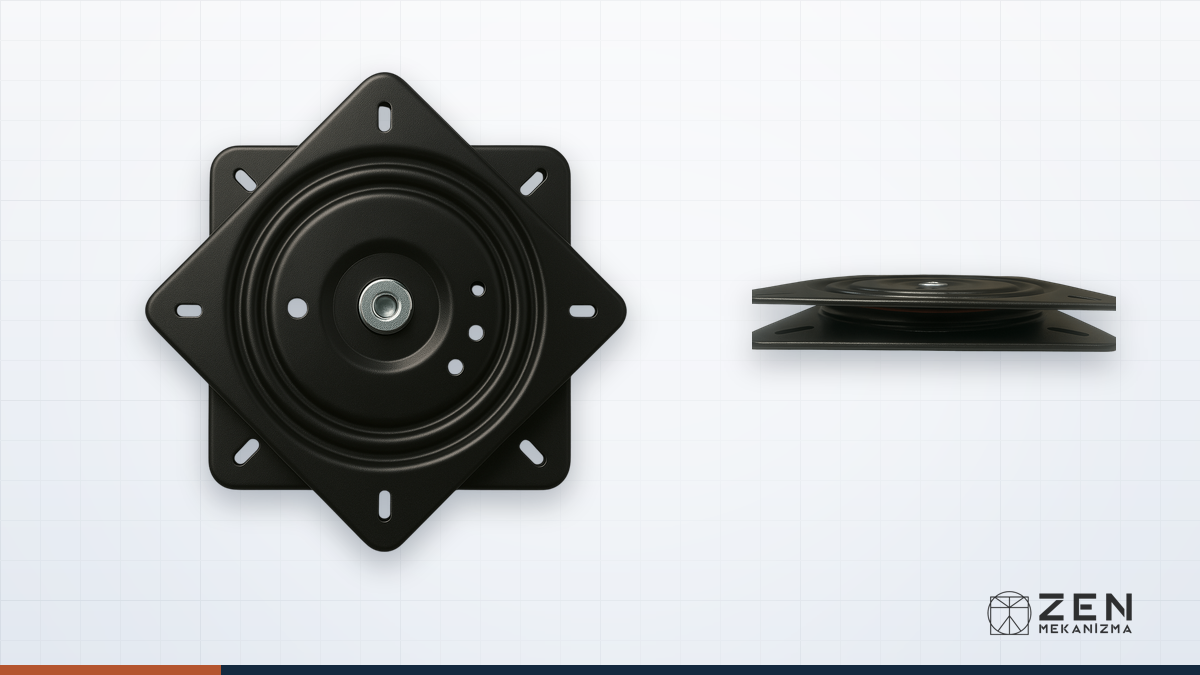
3. Rotating table mechanism: full 360° rotation
A swivel mechanism uses ball bearings seated between two metal plates to let the surface above turn a full circle. The standard size is 26 × 26 cm; capacity varies with size and ball race, so we ask for your plate dimensions and the weight going on top and settle the right size with you.
In single armchairs it lets the user change direction; in tables and coffee tables it makes serving easier; in display units it keeps the product visible from every angle.
4. Fittings and connectors: moving load and locking modules
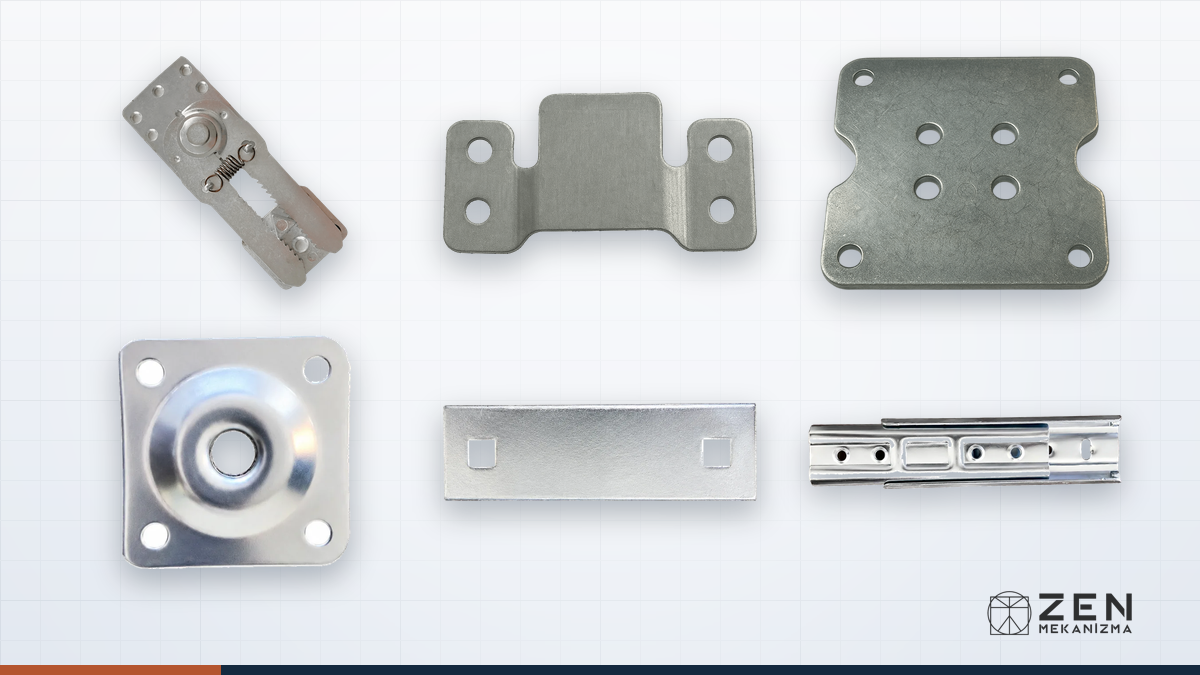
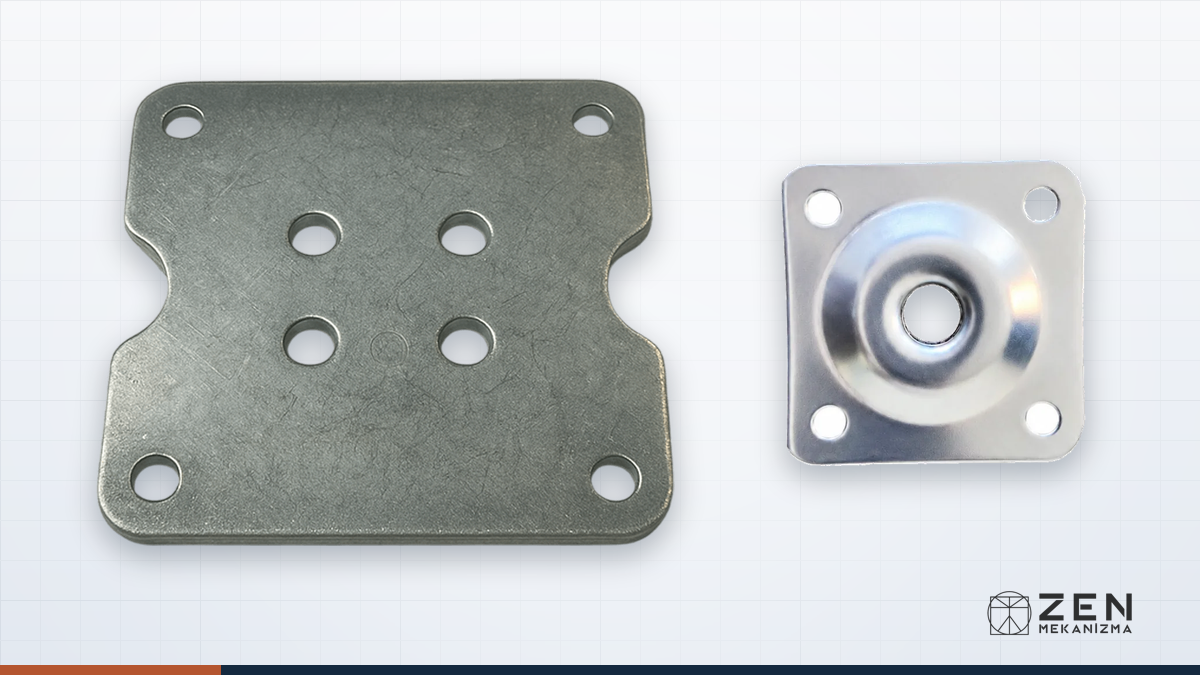
This group does one of two jobs: it spreads load across a wide surface instead of concentrating it at one screw, or it locks two seating modules together. Most common furniture failures — modules pulling apart, legs working loose, panels cracking — start with the absence of these parts.
| Part | What it does | Typical use |
|---|---|---|
| Alligator sectional sofa connector | Locks two seating modules together with a spring-loaded pawl (crocodile type); the modules cannot be pulled apart | Corner sofa sets, modular sofas, seating that is dismantled and rebuilt |
| Leg mounting plate | Transfers leg load into the body and sets the joint angle | Table and chair legs, coffee-table systems, legs under seating |
| Sectional connector bracket | Interlocks two modules; they separate without undoing screws | Corner sofa sets, modular sofas, seating that is dismantled and rebuilt |
Which one for which project?
| Project | Leading requirement | Starting point |
|---|---|---|
| Home sofa / armchair | Comfort and quiet operation | Backrest adjuster + CSS 4 |
| Hotel, office, waiting area | Durability under heavy use | CSS 4 or CSS Lux |
| Showroom / upper segment | Visible quality, silence | CSS Lux |
| High-volume series production | Unit cost | CSS 3 / CSS ECO |
| Swivel armchair, coffee table | 360° rotation | Rotating table mechanism |
| Knock-down furniture | Strength through repeated assembly | Corner connector + leg mounting plate |
Answer these three questions first
- How intensively will it be used? A home sofa opened a few times a day and a showroom piece demonstrated all day do not want the same mechanism.
- Will the mechanism be visible? Under upholstery, surface finish is a question of lifespan; on a visible part it is also a question of design.
- How many units will you build? Volume drives both the segment choice and whether custom production makes sense.
The mechanism decides how many years the furniture keeps working "like new". You can replace a worn frame; when the mechanism goes, the product goes with it.
Next step
You can review the full range with its use cases, and part of it with technical drawings, on the products page. Not every product carries a dimension table: we publish only verified values and do not fill a missing one with a guess. If you are unsure which mechanism fits your project, send us your use case and estimated volume through the contact page and we will work it out with you.
Frequently Asked Questions
What is a sofa mechanism?
A sofa mechanism is the metal part or kit of parts that delivers the moving function of furniture. Everything that changes the position or angle of the back, opens and closes the seat, rotates the seat pan or transfers load into the frame falls under this heading. Most of them sit under the upholstery and are invisible from outside.
What is the difference between a backrest adjustment mechanism and a CSS mechanism?
A backrest adjustment mechanism moves the back forward and backward to change the seat depth: pulled forward by hand it gives the sitting position, pushed back the relaxing position. CSS is the fitting kit that carries the opening and closing movement — a link plate, a pivot bolt and a nut-welded plate mounted to the wooden frame. The two can be used together in the same project.
How many backrest adjustment sets does a sofa need?
There is no fixed number. The quantity is set per project according to the width of the back; send us the back dimensions and we will work out the number of sets with you.
What is the most common mistake when choosing a mechanism?
Looking only at unit price without weighing usage intensity. A segment that is right for home use tires earlier than expected in a waiting area used all day, and the saving is easily wiped out by service costs in the field.
Does Zen Mekanizma produce custom sizes?
Yes. The rotating table mechanism has a standard size of 26 × 26 cm and can be manufactured in other dimensions to suit the project. For the other products, dimensions, angles and hole layouts are also assessed per project — send us the sizes and quantities and we will take it from there.
Let's find the right mechanism for your project together
Browse our products or get in touch with us.