Why Do Screws Strip in Chipboard? Making the Joint Last
A screw spinning free in chipboard is the most common failure in furniture assembly. The cause is rarely a "bad screw": chipboard and MDF do not grip a screw by its threads; they hold it by compressing the material around it. Once that grip is broken it does not come back on its own. Here is why it happens, which fixes actually work, and which merely buy time.
How do chipboard and MDF hold a screw?
In solid timber a screw works its way between long wood fibres and grips them. Chipboard has no fibres; it is made of chips pressed together with adhesive. As the screw enters it compacts those chips outwards, and the hold comes from the compressed material pushing back.
That makes screw hold in chipboard highly sensitive to two things: hole diameter and how far it is tightened. Once the chips are crushed to dust, there is nothing left to push back — the hole spins free.
Four real causes of stripping
1. No pilot hole, or the wrong diameter
A screw driven without a pilot hole splits its way through, crushing the chip around it and often raising the panel surface. An over-large pilot hole does the opposite: there is no material left for the thread to bite.
Practical starting values (test on offcuts for the exact figure):
| Screw diameter | Chipboard / MDF | Softwood (pine, spruce) | Hardwood (oak, ash) |
|---|---|---|---|
| 3.5 mm | ≈ 2.0 mm | ≈ 2.2 mm | ≈ 2.7 mm |
| 4.0 mm | ≈ 2.5 mm | ≈ 2.7 mm | ≈ 3.0 mm |
| 5.0 mm | ≈ 3.0 mm | ≈ 3.2 mm | ≈ 3.8 mm |
The rule: the pilot hole should be close to the shank diameter and smaller than the thread diameter. The shank passes through; the threads bite into the material.
Hardwood has its own column for one reason: the harder the material, the larger the pilot hole. Pine compresses as the screw goes in and makes room for itself; oak does not — forced into the same hole, the screw splits the timber instead. In oak and ash the pilot hole is roughly three quarters of the screw diameter; in pine and spruce two thirds is enough.
2. Over-tightening
The last half-turn of the driver is where most stripping happens. Every turn after the screw has seated grinds the chip in the hole. A torque screwdriver, or a lower clutch setting, removes most of this failure mode in series production.
3. The wrong screw type
Screws made for chipboard have deeper, more widely spaced threads that engage more material. Metal or drywall screws give far less hold at the same torque. When a fitting manufacturer specifies a screw type, this is usually why.
4. Load concentrated at one point
The most important cause comes last. When a table leg is screwed straight into the body, all the load from the leg lands in a few screw holes. Small impacts and vibration work those holes repeatedly: the hole widens by microns first, the leg starts to move, and eventually the panel cracks.
A stripped screw is a symptom, not a cause. The cause is nearly always the same: more load than it should carry, landing in a single hole.
Quick fixes and their limits
- Toothpicks and glue: refill the hole and hold in the short term, but change nothing about load distribution — the same point carries the same load, and the problem returns.
- A thicker screw: works at first, but the chip around it is already weakened, so the second failure comes sooner.
- A longer screw: not a solution if the panel is thin; beyond a point the screw risks breaking through the far face.
These are reasonable ways to keep an existing piece of furniture standing. For a manufacturer, the better question is: why is this load landing in a single hole at all?
The permanent fix: spread the load
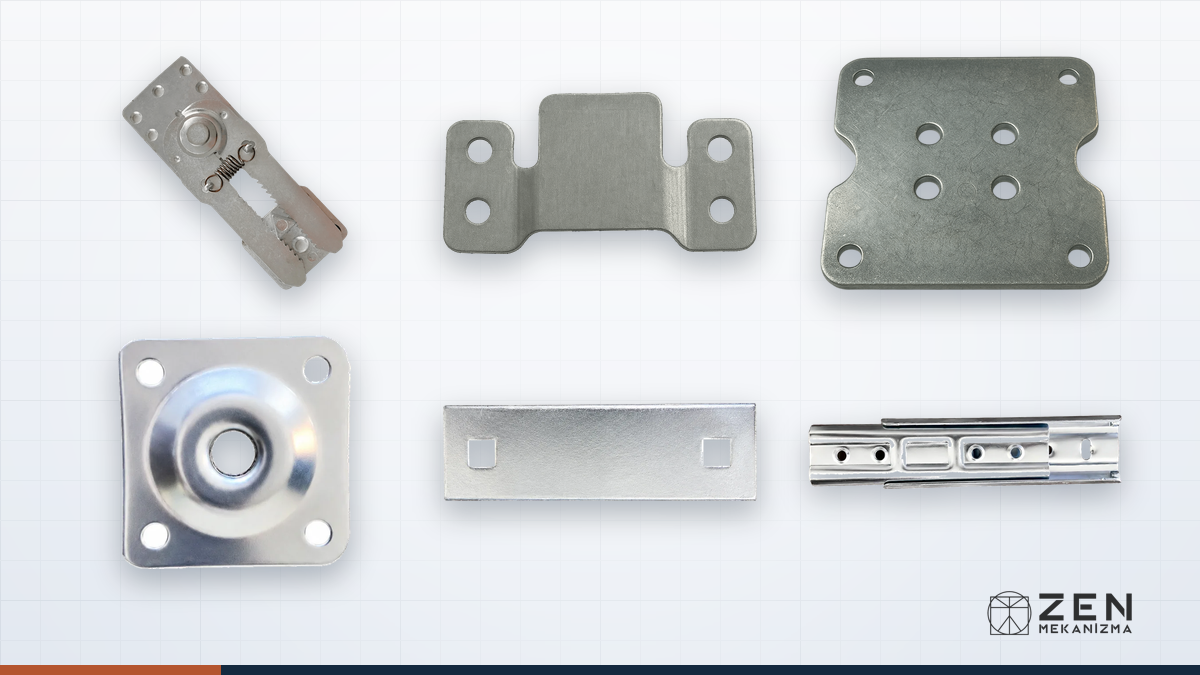
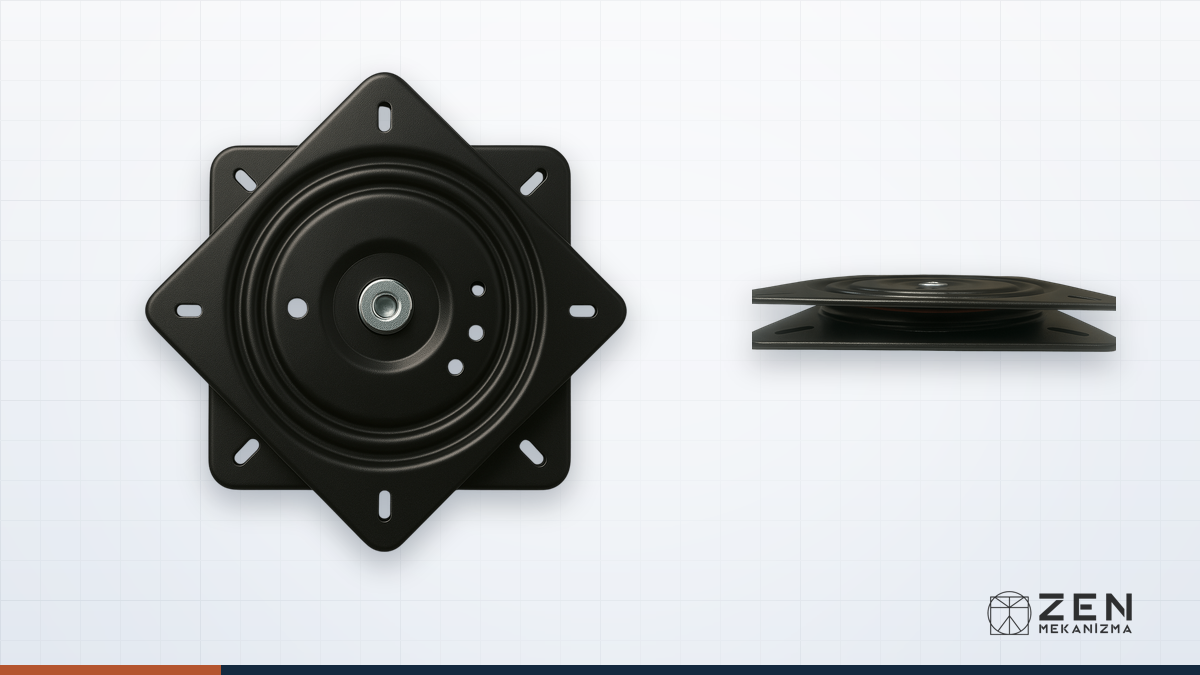
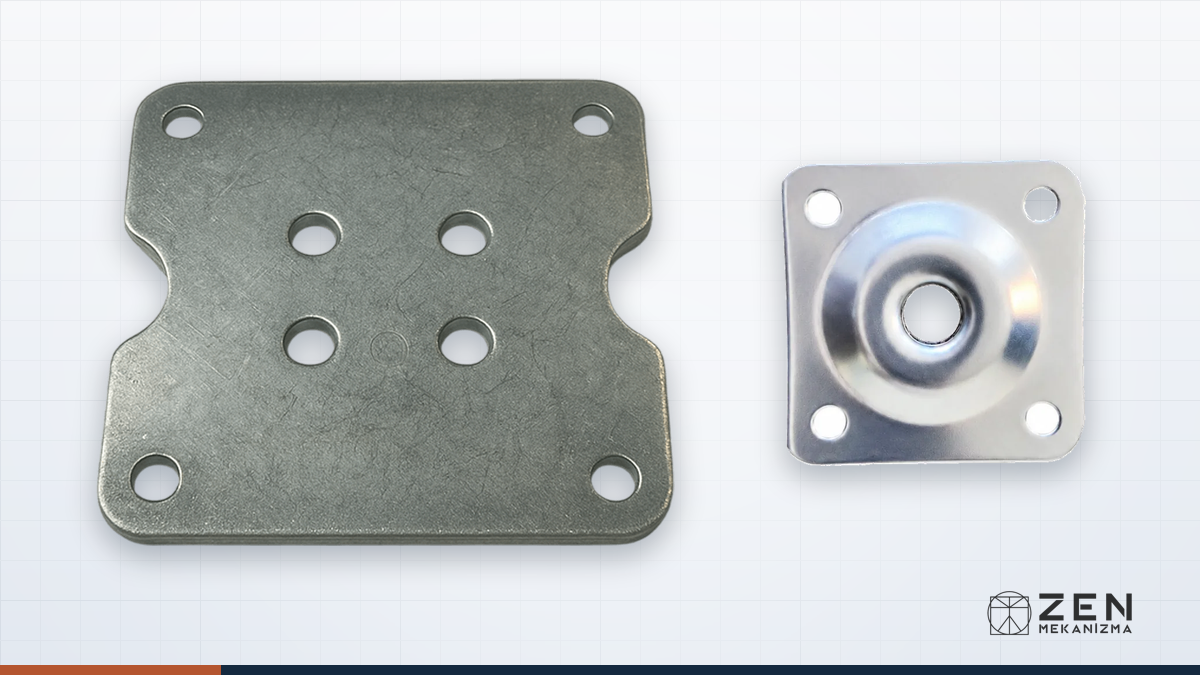
This is exactly what fittings exist for. A metal plate distributes load across its whole surface instead of one screw point; each screw carries less, and the hole never starts to widen.
- Leg mounting plate: transfers leg load into the body and fixes the joint angle. The holes the leg bolts into are countersunk, so screw heads finish flush and the leg sits flat against the plate.
- Alligator sectional sofa connector: locks two modules of a corner sofa set together (crocodile type). Its drilled plate is screwed to the frame at several points, so when the modules push against each other the load is not carried by a single screw.
- Insert nut: gives a threaded metal seat inside the timber. The screw now grips metal rather than chipboard — the most durable answer wherever things get taken apart.
The golden rule for knock-down furniture
Reusing the same screw hole widens it a little more each time. In modular and transportable furniture:
- Avoid using exactly the same hole at every assembly.
- Use insert nuts at frequently dismantled points — a metal thread does not wear away with every cycle the way a thread in timber does.
- State the screw sequence and torque clearly in the assembly guide.
On the manufacturer's side: design it out
Most stripping complaints from the field can be prevented by a few decisions at the design stage: a metal plate at every load-bearing joint, enough holes to share the load, and the correct screw type printed in the assembly guide. Those three lines remove a meaningful share of service calls before the product leaves the line.
For other frequent assembly errors see this guide, and for the full range visit the products page.
Frequently Asked Questions
What should I do when a screw strips in chipboard?
On an existing piece, the quick fix is to fill the hole with a glued dowel or toothpicks and re-drive the screw. The permanent fix is to take the load off that single point and spread it across a wide surface with a mounting plate, a corner connector or an insert nut. Otherwise the same point carries the same load and the problem returns.
What pilot hole size should I use in chipboard?
Close to the screw shank diameter and smaller than the thread diameter. In practice about 2.5 mm for a 4 mm chipboard screw and about 3 mm for a 5 mm screw is a good start; test on an offcut for the exact size.
Why is this less of a problem in solid wood?
In solid wood the screw grips long fibres. Chipboard is pressed chips held with adhesive, and the screw is held by the material compressed around it. Once those chips are crushed there is nothing left to push back, so the hold disappears faster.
When should I use an insert nut?
Wherever a joint is taken apart repeatedly: modular furniture, transported products, leg fixings. Because the screw engages a metal thread rather than chipboard, repeated assembly does not widen the hole.
Does over-tightening really matter that much?
Yes. Every turn after the screw has seated grinds the chip in the hole. In series production a torque screwdriver or a lower clutch setting markedly reduces stripping.
Let's find the right mechanism for your project together
Browse our products or get in touch with us.