A Glossary of Furniture Fittings: 23 Terms in Plain Language
Quotations, catalogue texts and assembly guides are often written in workshop language. This glossary explains the 23 terms that come up most often around furniture mechanisms and fittings, in everyday words. Each entry stands on its own, so you can jump straight to the one you need while preparing a quote or reading a drawing.
Fittings and load-bearing parts
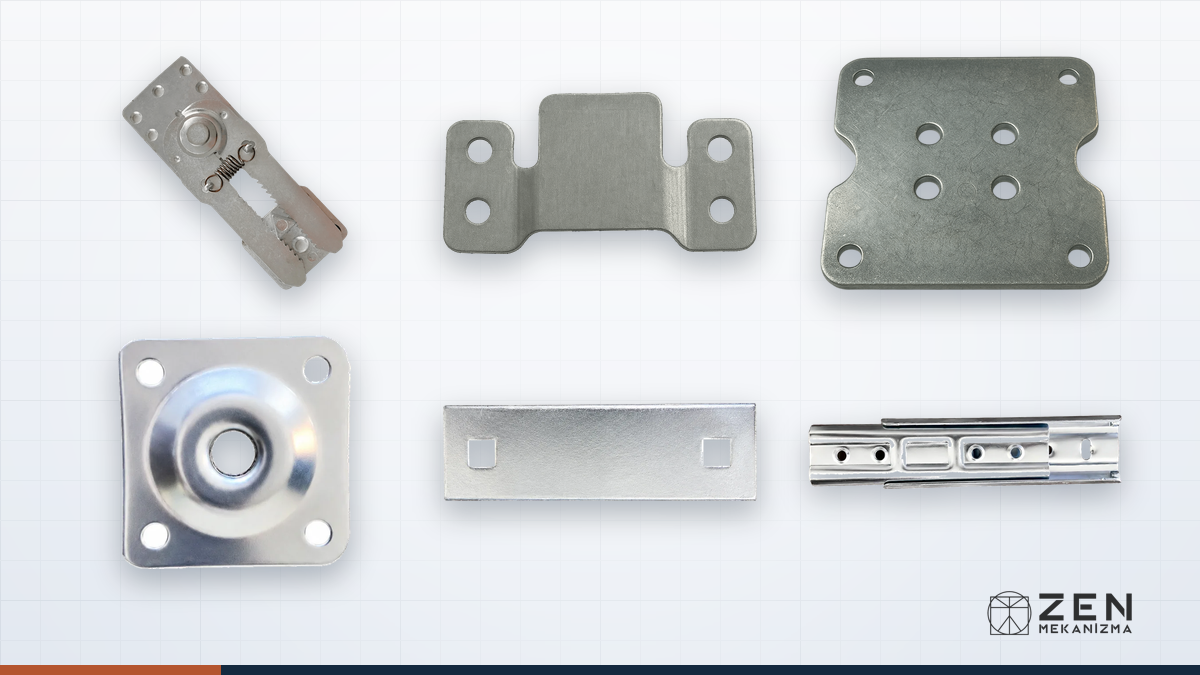
Corner connector
A metal part joining two panels or frame members at a 90-degree angle. It spreads load across a wide surface instead of concentrating it on one screw, reducing the risk of the corner opening up or the chipboard cracking. It also keeps the corner square during assembly. Note: the Alligator sectional sofa connector in the Zen Mekanizma range is not this type; it is a crocodile-type lock that holds two seating modules of a corner set together.
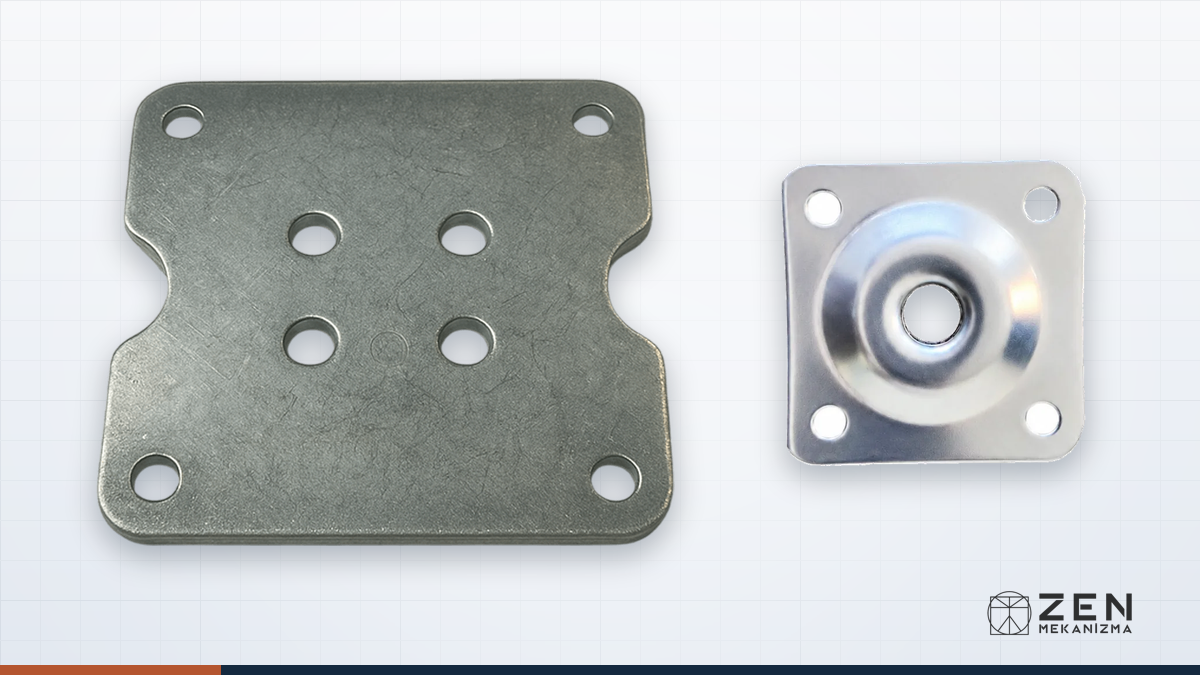
Leg mounting plate
A metal plate connecting a furniture leg to the body and transferring the leg's load into the frame. Because the load is spread across the plate, the leg is less likely to work loose or crack the joint; it also sets the angle at which the leg meets the body. See leg mounting plate.
Clamp plate
The trade uses this name for two different parts, which causes confusion. The first is a module lock: on corner sofa sets a bracket is screwed to each of two facing modules, and when the modules are set together the raised bodies interlock so the set stands as one piece — this is the product listed in our catalogue as kelepçe sacı. The second is a tube clamp: it grips a tube or profile around its circumference, so the clamping force is spread along the surface, thin-walled tube is not crushed and the element cannot rotate. We make that type to project dimensions, outside the catalogue.
Nut plate
A sheet plate with a hex nut welded to it. The bolt threads straight into that nut, so nobody has to hold a nut from the other side during assembly — one of the simplest ways to shorten assembly time in series production.
Insert nut
A threaded metal seat set into the timber. The screw now grips metal rather than chipboard, which prevents the hole widening where a joint is taken apart repeatedly.
Stud
A short pin that keeps two parts aligned. It carries no load of its own; its job is to make the parts meet in the right position and not shift during assembly.
Roller cap
A cap fitted at the point where a link plate turns. It stops metal rubbing directly on metal — the part that reduces squeaking and wear.
Holes and assembly terms
Pilot hole
A guide hole drilled before the screw goes in. It stops the screw splitting its way through the material and prevents cracking. Its diameter should be close to the screw shank and smaller than the thread.
Countersunk hole
A hole with a cone-shaped mouth. The screw head finishes flush with the surface, so the part sitting on top — a leg, for instance — makes full contact and the head is not in the way.
Slotted hole
A mounting hole made elongated rather than round. If the holes drilled in the furniture end up a few millimetres out, the part still seats properly and nothing needs re-drilling — one of the details that saves the most time on the assembly line.
Torque
Tightening force. Too much strips threads; too little lets the joint loosen over time. A torque screwdriver stops two people doing the same job from producing different results.
Pivot
The point a part turns around. It is the axis of the movement and usually the area of a mechanism that tires first.
Bend line
The edge along which a sheet part is folded. It determines how far the part wraps or how it seats, and is shown separately on technical drawings.
Movement and mechanism terms
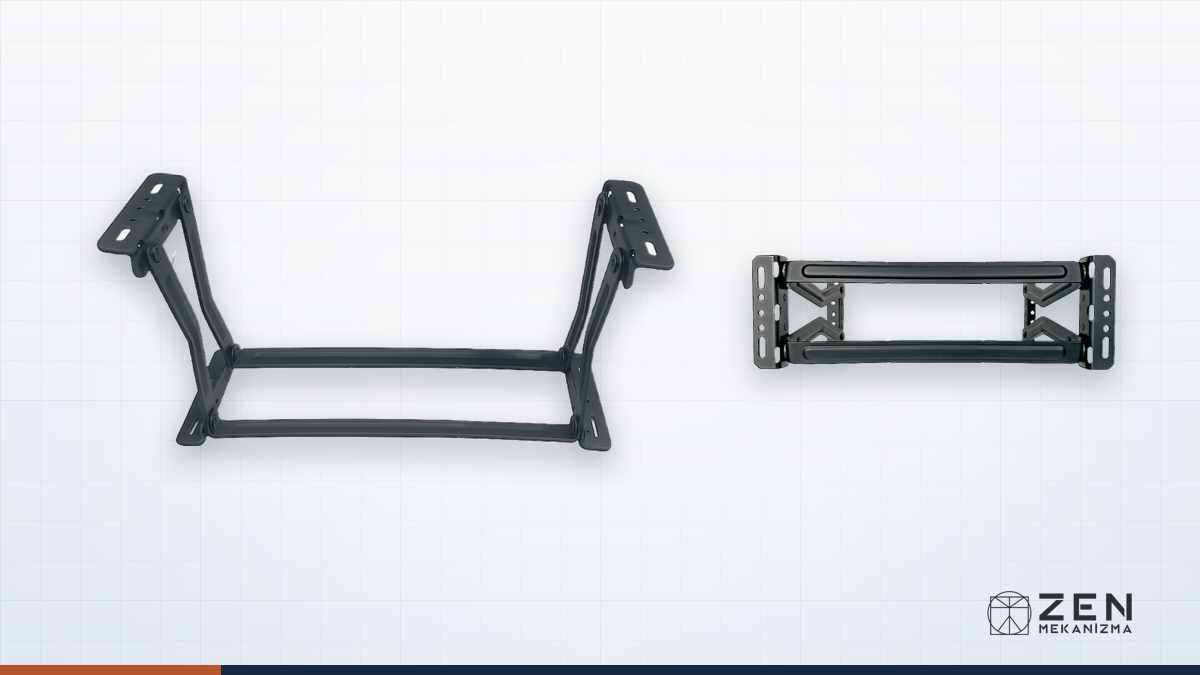
Stepped (ratchet) lock
A locking system of teeth and a spring-loaded pawl. Movement is free one way — the pawl slides over the sloped face of each tooth, which is the familiar clicking sound. The other way, the pawl bears on the straight face and the movement locks. Among Zen Mekanizma products you can see this lock in the Alligator sectional sofa connector; the drawing on the product page shows the teeth and the pawl step by step.
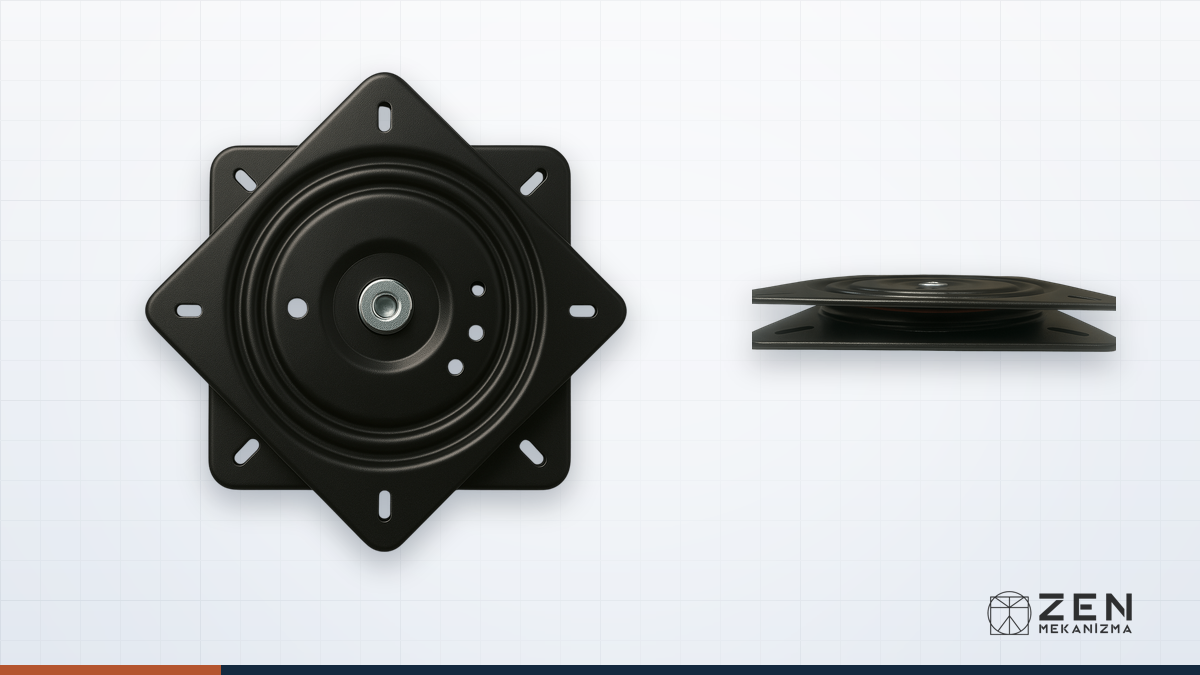
Ball bearing
Balls rolling along a channel between two plates. Because friction becomes rolling instead of sliding, rotation is quiet and effortless. This is how a rotating table mechanism works.
Cycle life
A figure for how many opening and closing movements a mechanism withstands. Without the test conditions it means little for comparison: always ask "how many cycles, under what load".
Load capacity
The weight a mechanism can carry. In most products it follows size — bigger size, higher capacity. Coating contributes nothing to capacity; that comes from the thickness and geometry of the load-bearing steel.
Edge load
Load landing at the edge rather than the centre. It creates a lever and tries to tip the mechanism. The same weight that is harmless at the centre can strain the mechanism at the edge, which is why wide tops call for a larger size. See sizing and load.
Module
One seating position; a three-seat sofa usually has three modules. The number of mechanisms does not always equal the number of modules: the quantity of backrest adjustment sets, for example, follows the width of the back. Confirm the quantity per product before ordering.
Material and surface terms
Galvanising
A zinc layer applied over steel. It delays corrosion and leaves a thin, metallic surface. Usually sufficient for dry indoor use.
Electrostatic powder coating
A coloured coating applied electrostatically and cured in an oven. More resistant to scratching and impact than galvanising, and it also finishes visible parts properly.
Chrome plating
A bright, hard, corrosion-resistant surface finish, preferred where the mechanism stays visible or moisture is present.
Chipboard, MDF and solid wood
Chipboard: wood chips pressed with adhesive; it holds a screw by compressing the material around it. MDF: pressed from finer fibres, with a more uniform surface. Solid wood: timber itself, where the screw grips long fibres and holds best. On stripped screws, see this guide.
The most expensive thing in a quotation is two parties reading the same word differently. Agreeing on terms comes before sending dimensions.
The full range, with technical drawings and use cases, is on the products page. If you hit a term that is missing here, write to us — we will answer it and add it to the list.
Frequently Asked Questions
What is a furniture fitting?
It is the general name for the metal components that join parts of furniture and transfer load from one part to another. Corner connectors, leg mounting plates, clamp plates, nut plates and insert nuts are the most common members of the group. Their shared job is to spread load over a wide surface instead of concentrating it on a single screw.
What is the difference between a nut plate and an insert nut?
A nut plate is a sheet part with a hex nut welded on, placed behind the timber so the bolt threads into it. An insert nut is a threaded metal seat set into the timber itself. Both let the screw grip metal rather than wood; insert nuts suit joints that are dismantled often.
What are slotted holes for?
They absorb a few millimetres of misalignment during assembly. Even if the holes in the furniture are not exactly where they should be, the part still seats and nothing needs re-drilling — which shortens assembly time in series production.
Why are countersunk holes needed?
They keep the screw head flush with the surface, so the part sitting on the plate — a leg, for example — makes full contact and the head is not in the way.
Why is a cycle life figure not enough on its own?
Because it does not include the test conditions. "100,000 cycles" cannot be used to compare two products unless you know the load and the range of movement it was measured at. Ask for the test conditions along with the figure.
Let's find the right mechanism for your project together
Browse our products or get in touch with us.