CSS 3, CSS 4 and CSS Lux: What Is the Difference?
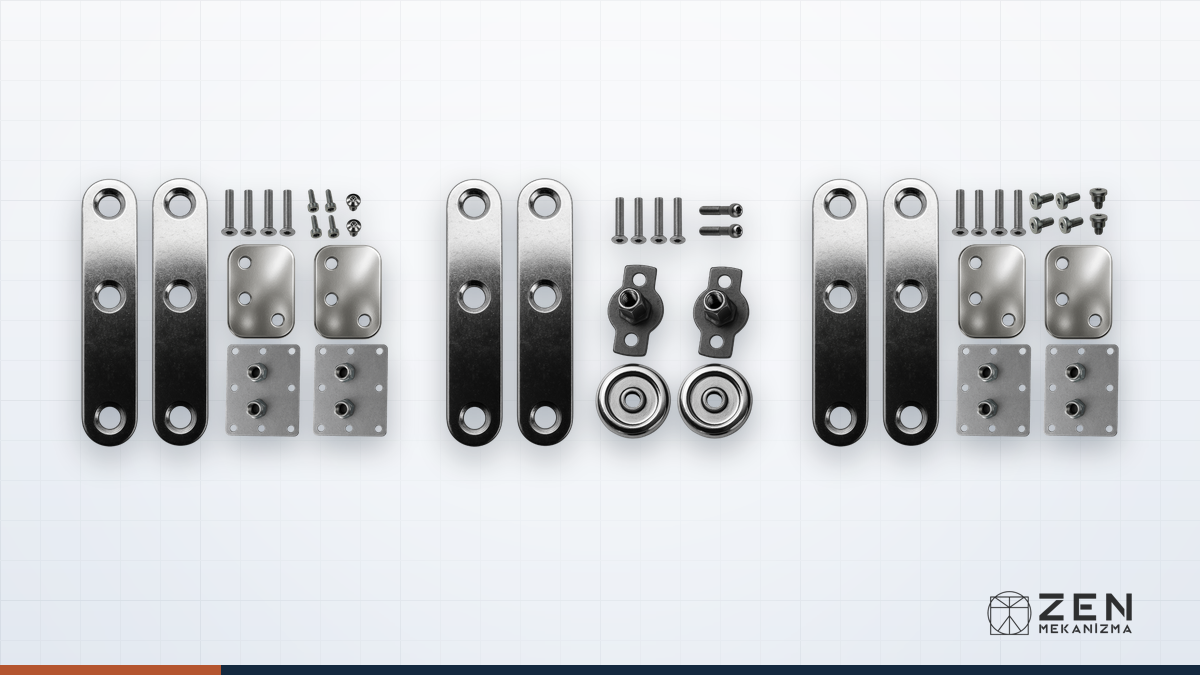
CSS 3 (CSS ECO), CSS 4 and CSS Lux are three members of the same seat mechanism family. The difference is not in function but in level: all three carry the opening and closing movement of a seat, but they sit at different points in kit contents, material grade and surface finish. This guide sets out exactly where the difference lies and which one belongs in which project.
Common ground: the same assembly logic
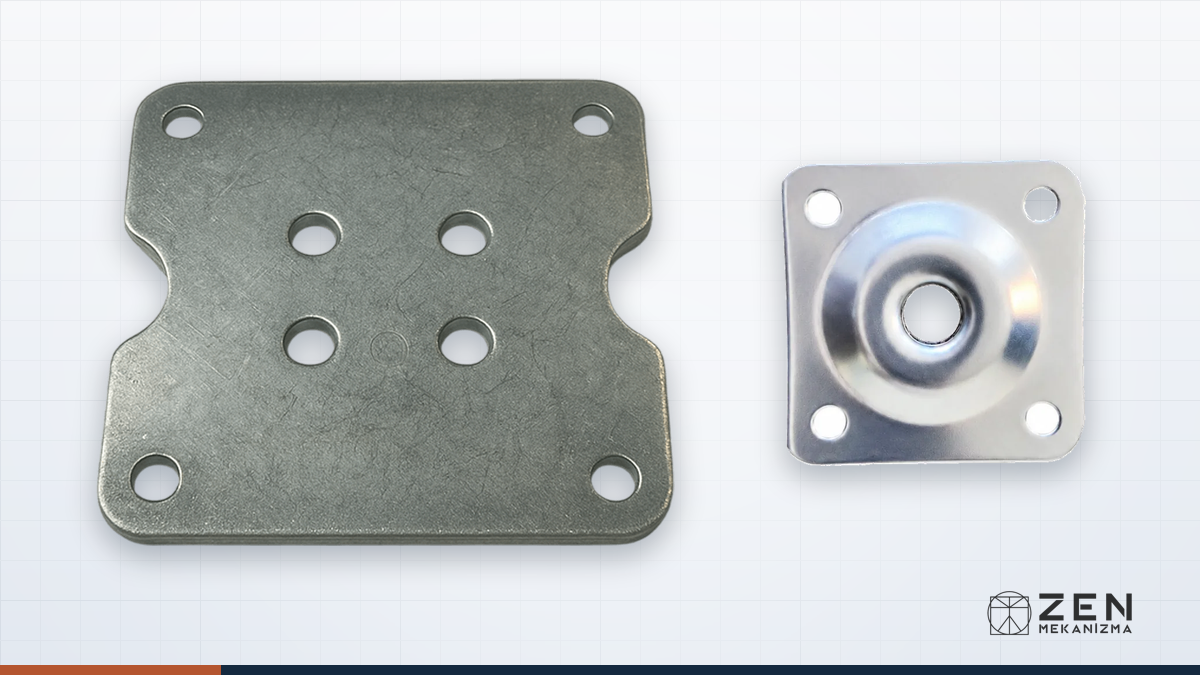
The most important thing the family shares is how it fits. The link plate is fixed to the wooden frame, the pivot bolt passes through the point the plate turns around, and it tightens into the nut-welded plate behind. Because the nuts are welded to the plate, nobody has to hold a nut during assembly.
The practical consequence: changing segment does not require changing your production line. For a company building the same model at two price points, this is the most useful line in the comparison.
Where the difference sits
| Topic | CSS 3 / CSS ECO | CSS 4 | CSS Lux |
|---|---|---|---|
| Position | Economy segment | General purpose | Upper segment |
| Main strength | Unit cost at volume | Cost–durability balance | Material grade and surface finish |
| Typical project | Bulk production, rental and short-term spaces | Office, home, waiting areas | Showroom, bespoke design, luxury seating |
| Assembly logic | Identical across all three — the line stays as it is | ||
Kit contents: the difference people miss
What comes out of the box is not identical across the three. CSS Lux and CSS 3/ECO share the same kit; CSS 4 differs:
| Part | CSS 4 | CSS Lux / CSS 3 (ECO) |
|---|---|---|
| Link plate (flat steel, three holes) | yes | yes |
| Long mounting screw | yes | yes |
| Short pivot bolt | yes | yes |
| Roller cap | yes | — |
| Short alignment stud | — | yes |
| Corner cover plate | — | yes |
| Nut-welded mounting plate | single nut | multiple nuts |
Knowing what two of those parts do makes the difference easier to read:
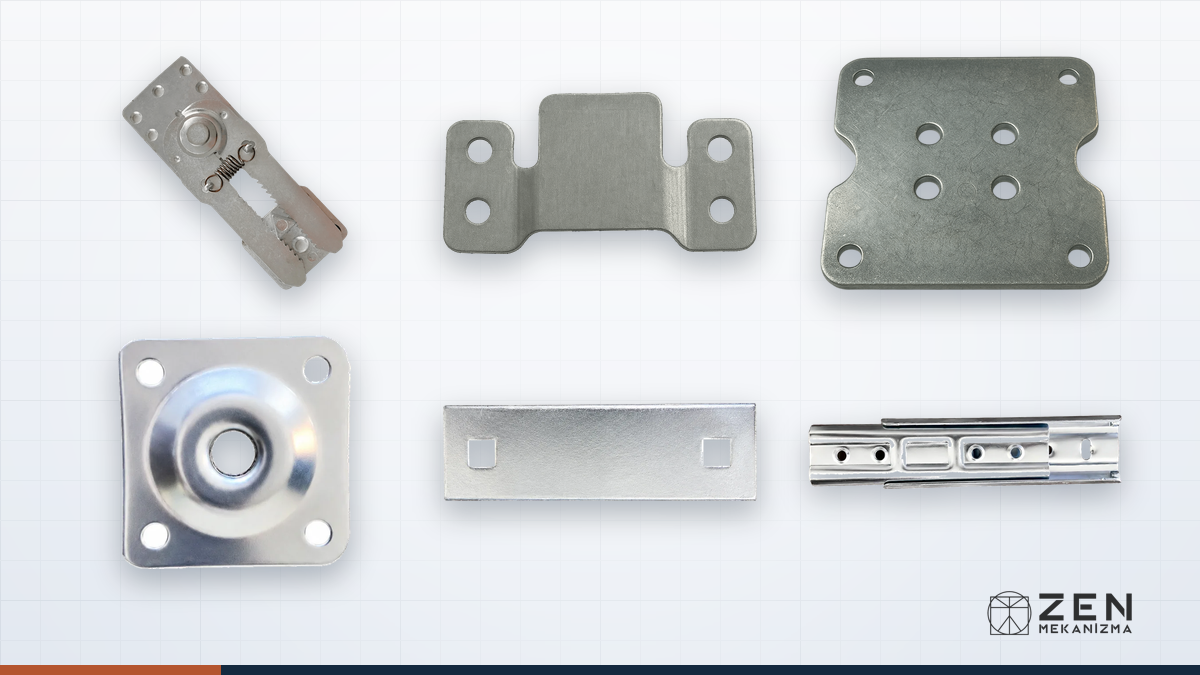
- Roller cap (CSS 4): fits at the pivot and stops metal rubbing directly on metal. This is the part that reduces squeaking and wear.
- Corner cover plate (CSS Lux / ECO): a pressed sheet with three holes that closes off the joint and spreads load over a wider area, reducing strain at the fixing point.
To understand the gap between segments, look inside the box rather than at the price list: which part is there, and which problem was it put there to solve?
An honest note on measurable differences
We do not publish numeric values such as sheet thickness, coating microns or cycle life on this page, because publishing an unverified technical figure is the most expensive kind of mistake to correct and causes real damage in a customer's project. Those values are shared per project at the quotation stage. If you need them for a sourcing decision, write to us and we will send what we have.
Which one for which project?
Choose CSS 3 / CSS ECO if:
- Volumes are high and unit cost drives the decision,
- The product has a short refurbishment cycle (rental spaces, short-term projects),
- The core opening and closing function is all you need.
Choose CSS 4 if:
- The product will be used regularly every day (home, office, waiting areas),
- You want a predictable balance between cost and durability,
- Repeatable assembly time matters in series production.
Choose CSS Lux if:
- Material grade and surface finish matter more than unit cost,
- The product is demonstrated constantly in a showroom,
- The product sits in the upper segment and visible quality is expected.
Two assumptions we correct often
1. "Take the cheapest — it does the same job." The function is the same; the service life is not. One early service call on a heavily used product easily erases the per-unit saving.
2. "Moving up a segment means changing our line." It does not. Family members share assembly logic; share your project dimensions and we can confirm it precisely.
You can review every member of the family, with kit contents and assembly drawings, on the CSS 4, CSS Lux and CSS 3 / CSS ECO pages. The five sofa mechanisms, the comparison and what to include in a quote request are on one page: backrest and headrest mechanisms. For an overview of all mechanism types, see types of sofa mechanisms.
Frequently Asked Questions
Are CSS 3 and CSS ECO the same product?
Yes, they are two names for the same product; both appear in catalogues and order correspondence.
What is the difference between CSS Lux and CSS 4?
Both belong to the same family and share assembly logic. The difference lies in material grade and surface finish. Kit contents differ too: CSS 4 includes a roller cap that reduces friction at the pivot, while CSS Lux includes a corner cover plate, an alignment stud and a multi-nut mounting plate.
Does the economy segment compromise durability?
The core opening and closing function is delivered in full; differences appear in areas such as material grade and surface finish. For high-intensity use we recommend considering the upper segments.
Will changing segment affect my production line?
Usually not. Because family members share assembly logic, no change to the line layout is needed. Share your project dimensions for a definite confirmation.
Where can I get sheet thickness and cycle life figures?
We do not publish those values unverified on the site. If you need them to compare suppliers, contact us and we will share the data we have on a project basis.
Let's find the right mechanism for your project together
Browse our products or get in touch with us.